


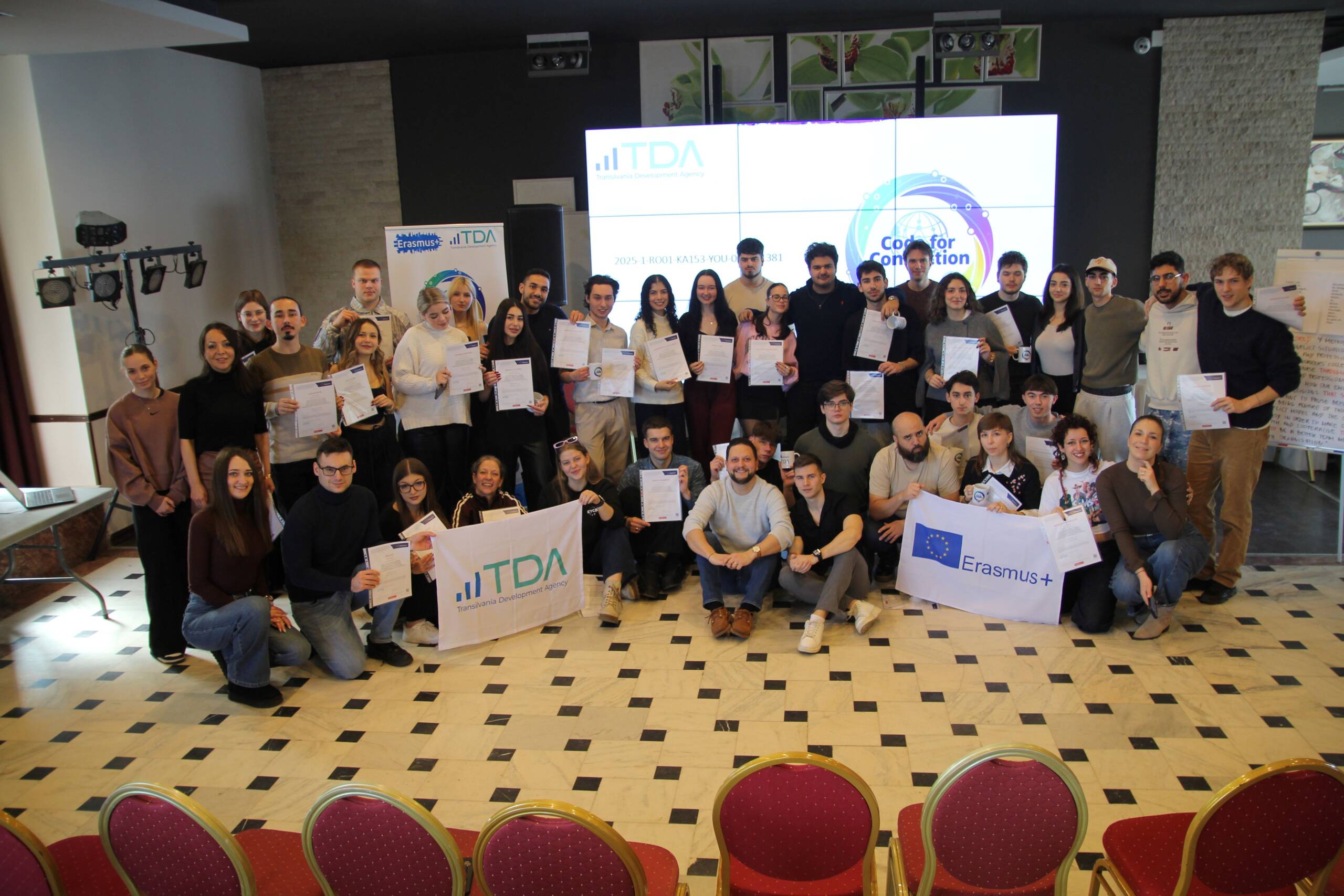
Between 8-14 February 2026, the Code for Connection Erasmus+ Training Course brought together 40 youth workers from across Europe in Sfântu Gheorghe, Romania. The project focused on developing competences in emotional intelligence, communication and conflict management, with the aim of supporting youth workers in preventing conflicts and fostering inclusion among young people from diverse cultural backgrounds. The training course was hosted by Asociatia TDA, marking its first Erasmus+ project as a coordinating organisation.
From the very beginning, the project created a welcoming and supportive environment where participants could connect and collaborate. Through icebreakers, group-building activities and open discussions, participants shared their expectations, experiences and perspectives, building a strong group dynamic that supported the entire learning process.
Throughout the training, participants explored emotional intelligence through non-formal education methods and experiential learning. Activities such as role plays, theatre-based exercises and group reflections allowed them to better understand emotions, develop empathy and improve their communication skills. Special attention was given to recognising emotional reactions and learning how to respond constructively in conflict situations.
Conflict resolution and mediation were key elements of the programme. Participants engaged in simulations and practical exercises where they practiced active listening, expressing emotions and guiding constructive dialogue. These activities helped them gain practical tools that can be directly applied in their daily youth work.
The training also addressed the challenges of communication in multicultural environments. Through discussions and interactive exercises, participants explored how cultural differences, communication styles and language barriers can influence understanding and sometimes lead to conflict. By reflecting on these aspects, they developed strategies for more inclusive and effective communication.
An important component of the project was community-based learning. Participants conducted interviews with local residents in Sfântu Gheorghe, exploring topics such as youth opportunities, volunteering, challenges and community needs. This activity helped them better understand the realities young people face and the importance of adapting youth work practices to local contexts.
In addition to the educational programme, the project included several intercultural and social activities that strengthened connections between participants. The Intercultural Evening provided a space to share traditions, food, music and stories from each country, promoting mutual understanding and cultural exchange. The Karaoke Night created a relaxed and joyful atmosphere, where participants connected through music and shared experiences. A study visit to Brașov offered an opportunity to explore the region, reflect and build stronger relationships outside the training environment.
As the training progressed, participants focused on turning learning into action. They developed ideas for future Erasmus+ projects, created workshop concepts and worked on action plans to implement the methods learned in their own communities. They also gained a better understanding of Erasmus+ opportunities, including the differences between Training Courses and Youth Exchanges, and explored ways to initiate future international collaborations.
The project concluded with the Youthpass ceremony, where all participants received certificates recognising their learning outcomes and competences developed during the training. As a symbolic reminder of the experience, each participant received a personalised project mug.
The final evening, held on 14 February, brought participants together for a special closing event. A festive dinner, followed by music and informal celebration, created a warm and memorable ending to the project. The event concluded with emotional farewells, marking the end of an intensive and meaningful learning journey.
Code for Connection was more than just a training course. It was a space for learning, collaboration and intercultural exchange. By focusing on emotional intelligence and communication, the project contributed to building stronger connections between people and promoting more inclusive and resilient communities across Europe.